How AI Is Transforming Hospitality Marketing (And Why you Should Care)
Discover how AI marketing automation helps restaurants, cafes and bars run smarter campaigns, fill quiet periods and build loyalty without a marketing team.

Is your “best CRM for restaurants” actually draining your budget? Learn 5 warning signs your restaurant CRM is wasting money, and what to switch to instead.
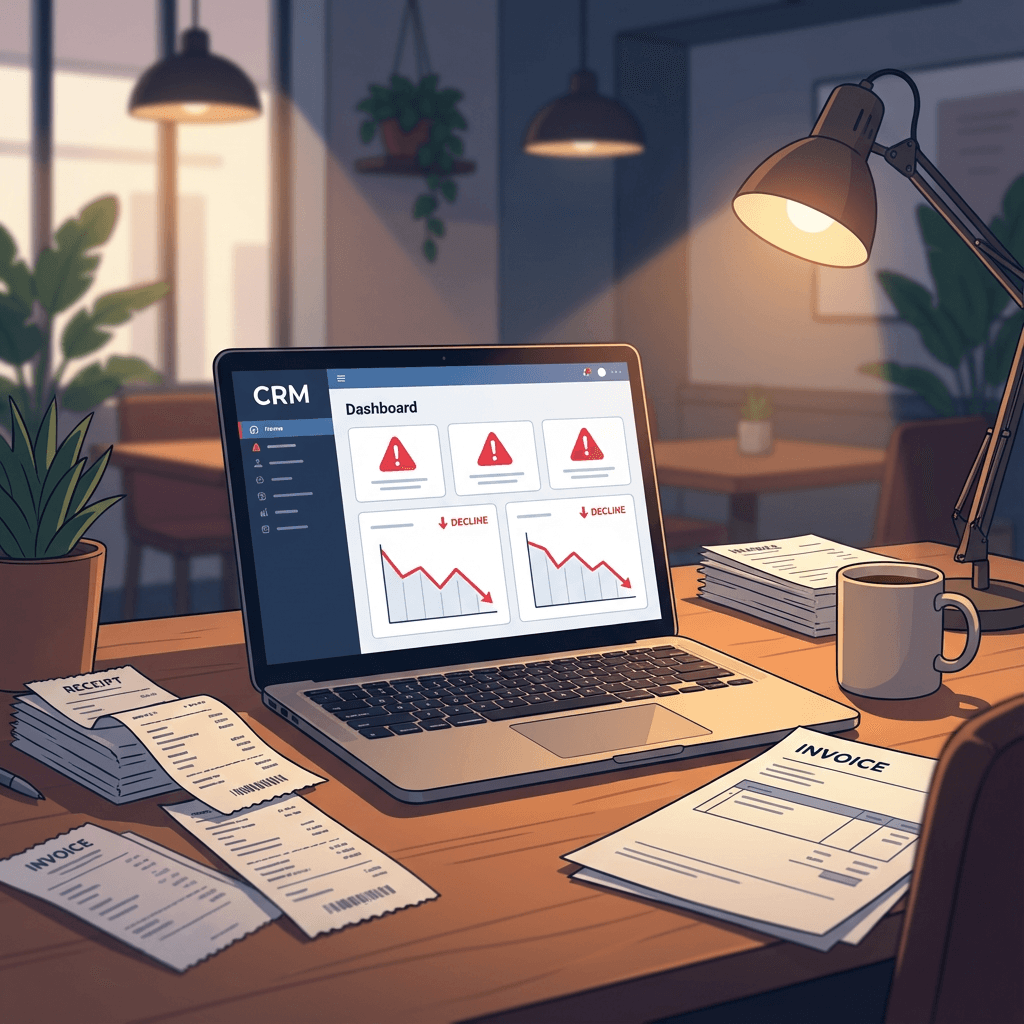
Let's be honest about what 2025 looks like for most independent restaurant owners. Margins are tighter than a hipster's skinny jeans, staff costs are climbing, and competition is fierce. You don't have the luxury of carrying dead weight, whether that's a menu item that doesn't sell, a supplier who overcharges, or software that promises the world but delivers a headache.
We talk a lot about food waste in this industry, but there's a massive amount of "tech waste" happening in back offices right now. You signed up for that shiny "all-in-one" platform because a salesperson promised it would revolutionize your marketing. But six months later, you're looking at the monthly direct debit and wondering, "What exactly is this doing for me?"
You aren't alone. Research from Productiv suggests that between 47% and 53% of SaaS (software) licenses go underutilized. That's half your software budget potentially going down the drain. For small businesses, that adds up fast: CFO Dive reported that unused licenses cost small companies an average of $2M in lost value in 2023.
While you might not be losing two mill, every hundred bucks matters when you're trying to run a profitable venue. Retention is the name of the game now. We know that a 5% increase in customer retention can increase profits by 25% to 95% (Bain & Company). But you can't get that retention if your tools are fighting against you.
So, how do you know if your current stack is up to scratch? Here are the 5 red flags that suggest it's time to ditch your legacy software and look for the best CRM for restaurants that actually works for you.
The traditional pricing model for most CRM platforms is based on the size of your database. It sounds fair in theory: more contacts equal more potential revenue, right?
Wrong.
In the hospitality world, databases decay faster than fresh herbs. People change emails, move cities, or simply stop engaging. If your CRM charges you for every single contact record regardless of their status, you're paying a "storage fee" for digital dust.
Many legacy systems make it incredibly difficult to clean your lists. They hide the "unsubscribe" data or make it a manual process to remove bounced emails. Why? Because their revenue depends on your list being bloated.
If you have 50,000 contacts, but only 12,000 are reachable and active, you shouldn't be paying tier-1 pricing for the other 38,000. A modern, hospo-focused CRM should help you automatically segment and clean your data, ensuring you're investing in people who actually want to hear about your new seasonal menu or Friday night specials.
The Fix: Look for dynamic list management that archives inactive users automatically, so your marketing budget goes toward engagement, not storage.
This is the classic "shelf-ware" problem. You bought the software. You did the onboarding call. You gave your managers logins.
And now? The last login was three months ago.
When you ask your venue manager why they haven't updated the customer tags or sent that email blast, the answer is usually a polite version of: "It's too hard, mate."
If a piece of software requires a PhD to navigate, it won't get used in a busy restaurant environment. Hospitality is fast. Your team is juggling roster changes, supplier deliveries, and service prep. They don't have time to navigate 15 sub-menus just to find a customer's birthday.
When adoption drops, data quality drops. If your floor staff aren't entering guest preferences because the interface is clunky on an iPad, your CRM becomes an empty shell. It's no longer a tool; it's just a bill you pay.
The Fix: User experience (UX) isn't just a buzzword; it's survival. The best CRM for restaurants is one that requires minimal training. It should be intuitive enough that a casual staff member can use it on their first shift.
This is the big one. In 2025, data silos are the enemy of profit.
If your CRM operates on an island, disconnected from your Point of Sale (POS) and your reservation system, you're missing 90% of the picture.
Here's a common scenario:
• System A (Reservations): Knows that "Sarah" booked a table for 4 on Friday.
• System B (POS): Knows that Table 6 spent $400 on premium wine.
• System C (CRM): Has Sarah's email address but has no idea she came in or what she spent.
So, on Monday, your CRM sends Sarah a generic "We miss you, come in for a discount!" email.
This is a disaster. Sarah just spent $400 with you! She doesn't need a discount; she needs a "Thank you" or a recommendation for a wine tasting event.
Without integration, specifically with platforms like ResDiary, you're flying blind. You're treating your VIPs like strangers. McKinsey reports that 78% of consumers are more likely to repurchase from brands that personalize their experience. You can't personalize if your systems aren't talking.
The Fix: Your CRM must natively integrate with your reservation platform (like ResDiary) and your POS. It needs to pull that data together so you can see the "Golden Record": a single view of the guest that includes their contact info, their dining history, and their average spend.
Marketing without attribution is just gambling.
You send an email blast. You run a Facebook ad. You post on Instagram. The restaurant is busy on Saturday night.
Did the email work? Or was it just a busy Saturday?
If your current CRM gives you "Open Rates" and "Click Rates" but can't tell you "Revenue Generated," it's failing you. Vanity metrics (likes and opens) make you feel good, but they don't pay the rent.
You need to know that Email Campaign A resulted in 15 bookings and $3,500 in revenue, while SMS Campaign B resulted in zero bookings.
Many generic CRMs (the ones built for e-commerce or tech companies) aren't designed for the physical world of hospitality. They can track clicks to a website, but they struggle to track a customer walking through your door and sitting at a table.
The Fix: Look for "Closed-Loop Attribution." This connects the marketing message sent to the actual transaction in the venue. This is the only way to calculate true ROI (Return on Investment).
Time kills momentum.
We've heard horror stories of venue groups signing contracts for enterprise CRMs and spending six months just trying to get the data imported. By the time the system is live, the marketing manager who bought it has quit, the menus have changed three times, and the summer peak season is over.
In hospitality, agility is everything. If you decide on a Tuesday that you want to launch a rainy-day promo for Wednesday, your software needs to facilitate that, not block it with complex workflows or required "consultant configurations."
If your onboarding process feels like a never-ending IT project involving spreadsheets, CSV exports, and API key hunting, you're wasting money on opportunity costs. Every day the system isn't running is a day you aren't capturing data.
The Fix: Modern SaaS should be "Plug and Play." With cloud integrations, connecting your reservation system and CRM should take minutes, not months.
A Restaurant CRM (Customer Relationship Management) is software that helps venues manage guest relationships: storing contact details, dining history, preferences, and spending patterns in one place. The best ones connect to your POS and reservation systems to build a complete picture of each guest, enabling personalized marketing and better service.
Most independent venues spend between $100-$300/month on CRM and marketing automation. The key is ROI: if your software isn't generating measurable revenue (trackable bookings, repeat visits), it's too expensive at any price. A good rule of thumb is that your marketing software should pay for itself within the first month through attributable bookings.
Yes. nollie has a native integration with ResDiary, meaning your reservation data syncs automatically. When a guest books through ResDiary, their profile in nollie updates in real-time, including party size, booking frequency, and special occasions. This allows you to trigger personalized campaigns based on actual dining behavior, not just email opens.
It's 2025. The days of "spray and pray" marketing (blasting the same generic newsletter to everyone in your database) are over. Your customers expect you to know them, value them, and offer them experiences that match their tastes.
If your current software feels like a burden rather than a superpower, it's costing you more than just the monthly subscription fee. It's costing you the clarity and insight you need to grow.
Don't let bad tech hold your venue back. If you found yourself nodding along to any of these five signs, it might be time to look for a better partner.
Ready to stop paying for a CRM that doesn't pay for itself? See how nollie's booking page and campaigns work together. Built by hospo people, for hospo people.
Discover how AI marketing automation helps restaurants, cafes and bars run smarter campaigns, fill quiet periods and build loyalty without a marketing team.
Bring lapsed restaurant guests back with three email templates, sensible timing and a simple way to track bookings. Practical advice for busy venue teams.
Set up Wix restaurant email marketing with labels, segments, automations, templates, guest data, and hospitality CRM upgrade signs.