Win Back Lapsed Restaurant Guests (Templates + Timing)
Bring lapsed restaurant guests back with three email templates, sensible timing and a simple way to track bookings. Practical advice for busy venue teams.

Q1 restaurant marketing trends for 2026: what operators should prioritise, seasonal tactics that work, and how to start the year without panic.
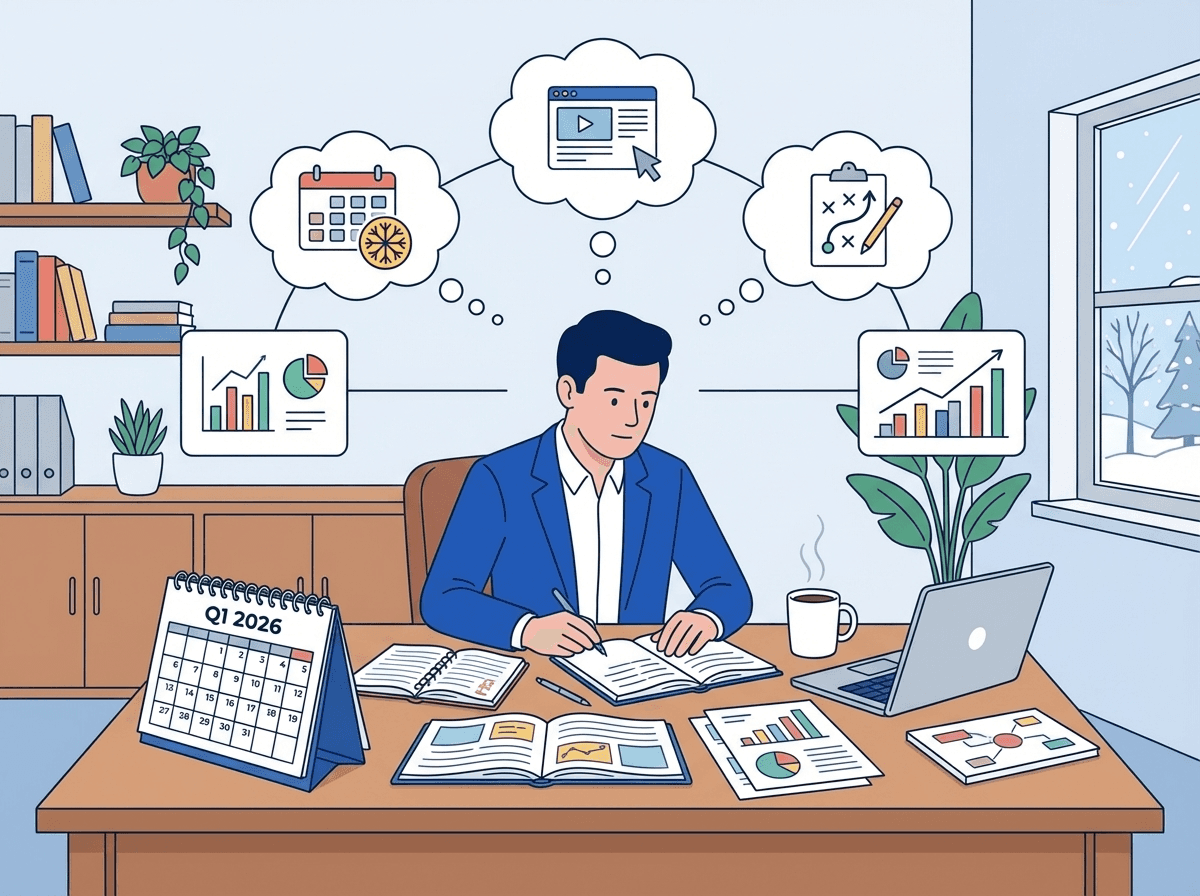
Q1 restaurant marketing is where good years are built, or quietly binned. January to March isn't just slower; it's when guest habits reset, wallets tighten, and your team is already tired from the holiday chaos. If you wait until you "need it," you'll end up doing what everyone does: discounting, posting a few desperate socials, and hoping the weather changes.
Here's the blunt bit: around 70% of first-time diners never return (Bloom Intelligence, 2025). That means your busiest months last year didn't automatically create a strong year this year: they created a pile of one-timers you haven't followed up with yet. And your best guests? The top ~12% can drive ~40% of revenue (Bloom Intelligence, 2025). Q1 is the moment to lock them in early, bring back the nearly-lost ones, and set up marketing you don't have to babysit every week.
Let's get you out of panic mode.
In the UK, Q1 is the hangover season.
The venues that win Q1 aren't necessarily "busier." They're more intentional: they trade random reach for repeat visits, predictable covers, and better margins.
In Q1, guests behave differently:
And because guests are 72% more likely to return with personalised offers (Restroworks, 2025), generic "Come try our new menu" blasts won't cut it.
Q1 is when cash flow pressure gets real:
The fix isn't "spend more." It's spend smarter: focus on retention, win-backs, and first-party data so you can market without relying on paid ads to do all the heavy lifting.
In 2026, "personalisation" isn't adding someone's first name to an email. It's:
Operators are leaning into AI because manual segmentation is a time-sink. If you're running a venue, you don't have time to build 14 audiences every week. Personalisation needs to be operationally realistic.
Third-party platforms are useful, but they don't equal ownership.
In Q1 2026, smart operators are prioritising:
Why? Because the economics are brutal: if 70% of first-timers never return (Bloom Intelligence, 2025), your job is to stop treating every week like you're "starting from zero."
Email still matters, but in Q1, SMS often does the heavy lifting for time-sensitive bookings.
What we're seeing across hospitality:
The best approach in Q1 is a simple channel split:
Guests in 2026 expect you to have some values, but they don't want a lecture.
Q1 is the time for practical "proof points":
Keep it grounded: "Here's what we're doing" beats "We care deeply about…"
Q1 is not the season for "reach campaigns" to strangers 40 minutes away.
Your best ROI is local:
Community-led marketing also protects margin. If you pull locals in consistently, you don't have to buy demand with discounts.
January is retention season. You're not trying to go viral: you're trying to go steady.
Priority 1: Win-back lapsed guests
A "lapsed" guest might be anyone who hasn't visited in 60–180 days (depending on your venue type). The key is to define it and act.
Industry benchmark: win-back campaigns typically recover 12–15% of lapsed guests (Restroworks, 2025). That's huge in Q1.
Practical win-back message examples:
Keep offers margin-safe:
Priority 2: Database cleanup (yes, boring, but still important)
You can't personalise if your data is chaos.
Do a quick clean:
This is where Q1 marketing stops being random and becomes repeatable.
Priority 3: Lock in automation
January is when you build the machine you'll thank yourself for in March.
Minimum automations for Q1:
Remember the benchmark: the top ~12% can drive ~40% of revenue (Bloom Intelligence, 2025). Automations protect that relationship when you're busy.
February is short, so you need to be early.
Valentine's Day: don't overcomplicate it
Pick one strong offer and market it clearly. Common mistakes include six different packages and confusing seating times.
What works:
Messaging tips:
Start Mother's Day planning now (UK is March)
If you wait until March, you're competing with everyone at once.
In late February:
If you have guest data, segment likely buyers:
Personalised outreach matters because guests are 72% more likely to return with personalised offers (Restroworks, 2025). "Mother's Day is coming" is fine. "Want us to hold your usual Sunday table for Mother's Day?" is better.
March is where Q1 turns from "survive" into "build momentum."
Mother's Day (UK): get operational and marketing aligned
Marketing can't save a messy service.
Key decisions:
Marketing sequence (simple, effective):
Easter prep
Easter isn't Q1 every year, but the planning often starts in March. Start teasing:
Daylight savings: use the "new energy"
When evenings get lighter, guests start shifting back into "after work" behaviour.
Do:
Discounting trains people to wait for the next deal, and in Q1 you'll feel that pain quickly.
Better alternatives:
If you disappear in January, you're basically telling guests: "We're irrelevant until spring."
Even one solid message per week keeps your venue top of mind, especially for locals deciding where to go last minute.
When things are quiet, you have time to set up automations. When things get busy again, you won't.
If you only do one thing: set up a first-time guest follow-up. With 70% of first-time diners never returning (Bloom Intelligence, 2025), that's the most preventable leak in the bucket.
Your regulars are your cash flow stabilisers. And the numbers back it: the top ~12% can drive ~40% of revenue (Bloom Intelligence, 2025).
Treat them like insiders:
nollie brings bookings and marketing together for restaurants, cafes, bars and pubs (not hotels), so every booking builds one guest profile nollie can act on. In Q1, it's most useful for turning "we should probably…" into "it's already running."
Specifically, it helps venues:
If you want Q1 to feel less like survival and more like controlled momentum: Book a nollie demo.
Bring lapsed restaurant guests back with three email templates, sensible timing and a simple way to track bookings. Practical advice for busy venue teams.
Set up Wix restaurant email marketing with labels, segments, automations, templates, guest data, and hospitality CRM upgrade signs.
A practical restaurant email marketing guide for 2026: campaigns, guest data, automation, compliance, and how to turn emails into repeat bookings.