Win Back Lapsed Restaurant Guests (Templates + Timing)
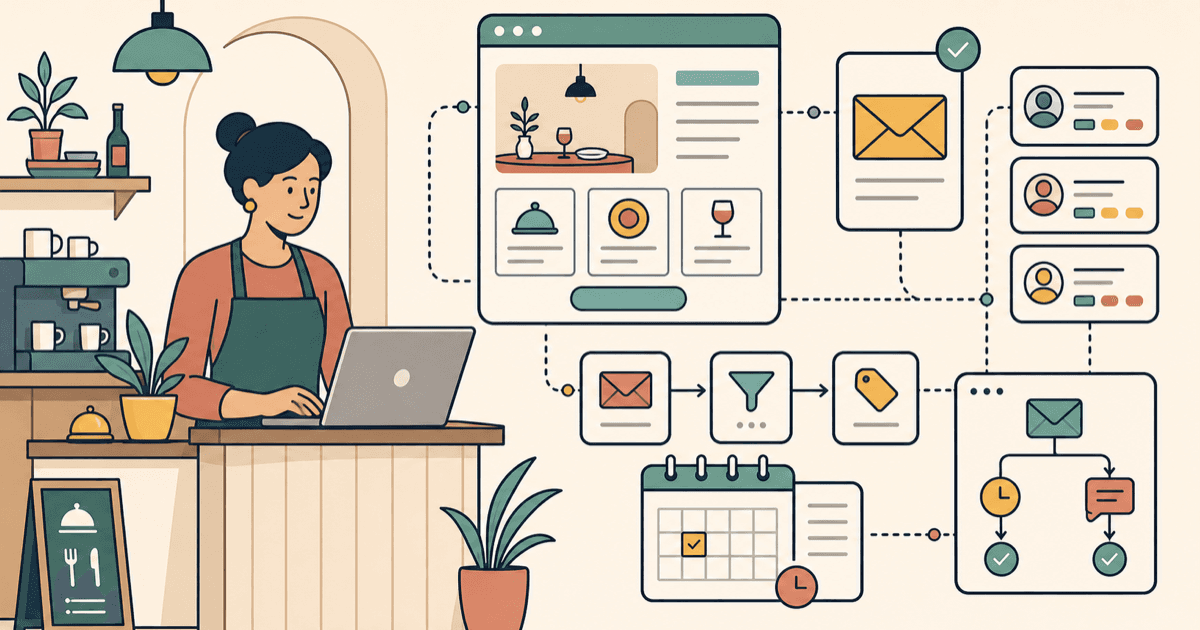
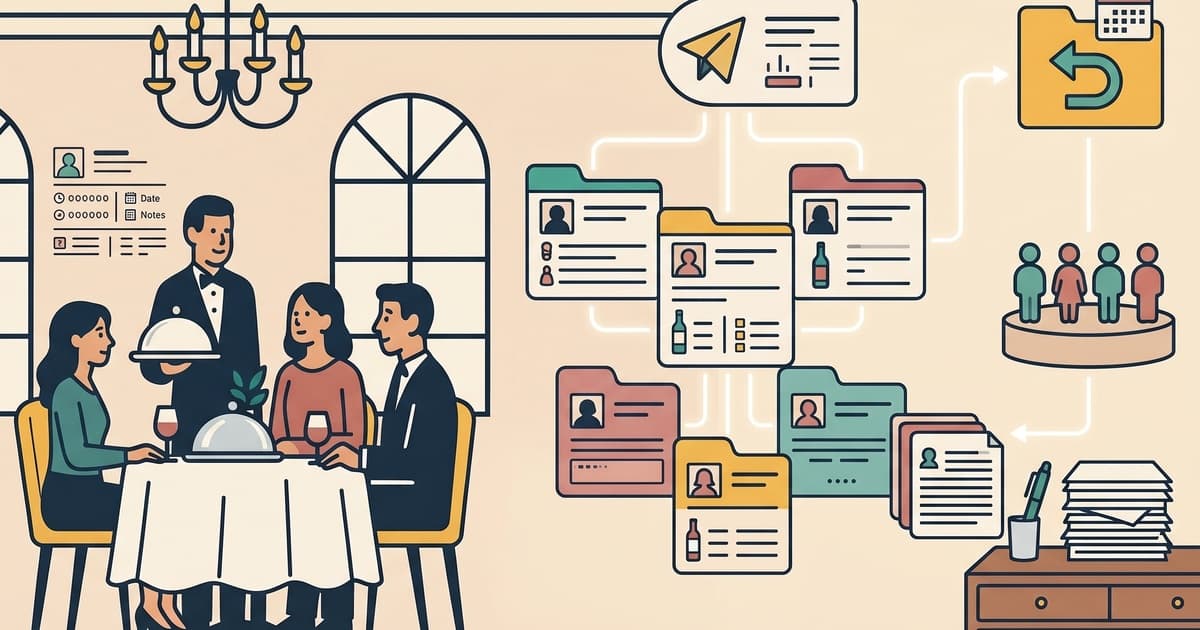
Bring lapsed restaurant guests back with three email templates, sensible timing and a simple way to track bookings. Practical advice for busy venue teams.

Stop trading hours for covers. Learn how restaurant marketing automation drives revenue, fills seats and personalises guest experiences while you sleep.
Let's be honest about what 2026 looks like for most independent restaurant owners.
You're dealing with tighter margins than ever. Staff costs have climbed. Food costs have climbed faster. You're probably running service short-staffed at least once a week because someone called in sick and the casual pool has dried up.
Meanwhile, you're supposed to be "building your brand on social media" and "leveraging email marketing" and "creating personalised guest experiences." All while making sure the pass is clear, the floor is covered, and the bank account isn't bleeding.
Here's the thing: you know marketing matters. You've seen what happens when you send a well-timed offer: the phone rings, the online orders tick up, tables fill. The problem isn't knowing marketing works. The problem is finding the time to actually do it.
Most venues fall into one of two camps:
Camp 1: The Sporadic Blaster. You collect emails through your booking system, maybe even your WiFi. Once a month (or every few months when guilt kicks in), you send a generic newsletter to everyone on the list. Open rates are mediocre. Redemptions are a mystery. You're not sure if it's working, but it feels like you should be doing something.
Camp 2: The Social Media Hopeful. You post photos of specials to Instagram. You get likes. Maybe some comments. But likes don't pay rent. The connection between your 3,000 followers and your actual revenue is fuzzy at best.
Neither approach is wrong. But neither is particularly effective either.
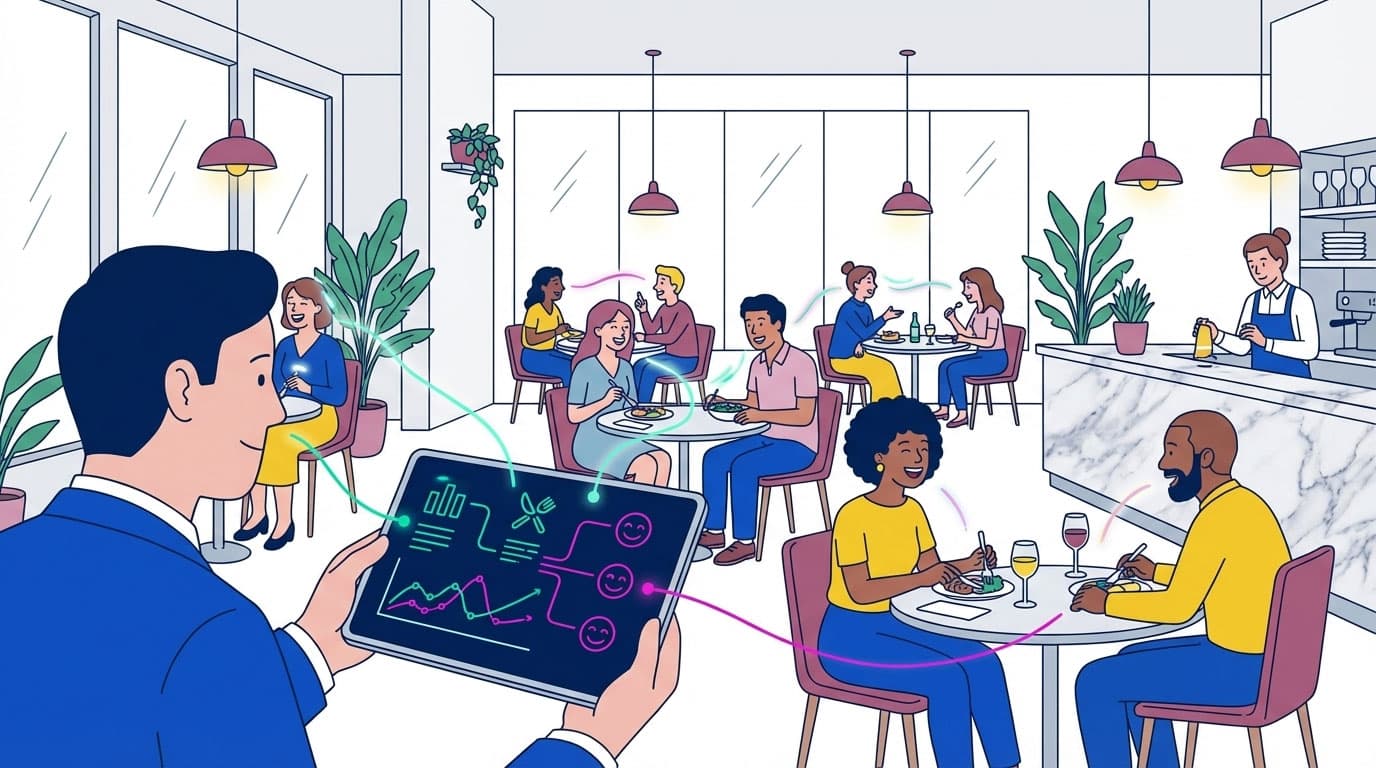
Restaurant marketing automation offers a third path: one where your marketing runs itself based on how your guests actually behave. Not a scheduled blast you had to write at midnight. Not hoping the algorithm favours your chicken parmigiana photo. Actual, targeted, measurable marketing that triggers automatically when specific conditions are met.
This guide will show you exactly what that looks like, why it matters, and how to implement it without adding another full-time job to your plate.
Before we go further, let's clear up what we're actually talking about, because "automation" gets thrown around loosely.
Restaurant marketing automation is not:
Those are helpful. They're not automation.
Restaurant marketing automation is:
The key difference? Behaviour triggers action.
With scheduling, you decide when something happens. With automation, the guest's behaviour decides when something happens. The system watches, waits, and acts, without you lifting a finger.
With scheduling, you decide when something happens: "Send this email on Tuesday at 10am." The same message goes to everyone on your list. You need to create new content each time you want to send something, and it's hard to measure whether any specific message actually drove revenue.
With automation, the guest's behaviour decides when something happens: "Send this email 3 days after a guest's first visit." Different guests receive different messages based on their segment: a lapsed regular gets a win-back offer while a first-timer gets a welcome sequence. You build the workflow once and it runs indefinitely. And because each automation is tied to specific triggers and actions, you get clear attribution on exactly which campaigns generate results.
Think of it this way: scheduling is you pulling the trigger. Automation is setting up a system that fires on its own when the right target appears.
If you've been collecting email addresses for years, you might think you've got a valuable marketing asset. And you do, sort of.
But here's the uncomfortable truth: a list of emails without context is nearly useless.
Knowing that john.smith@example.com exists tells you nothing. Knowing that John visits every second Friday, spends an average of $85, always orders the ribeye, and hasn't been in for 6 weeks? That's actionable intelligence.
Your Point of Sale system collects this data every single service. Every transaction builds a profile. The problem is that for most venues, this data sits in the POS and never connects to your marketing.
This is the gap that restaurant marketing automation closes.
Modern CRM platforms integrate directly with your POS. When John makes a purchase, his profile updates automatically. His visit count ticks up. His average spend recalculates. His "days since last visit" counter resets.
And when John doesn't come in for a while? The system notices. It can trigger a "we miss you" message automatically, no spreadsheet tracking required.
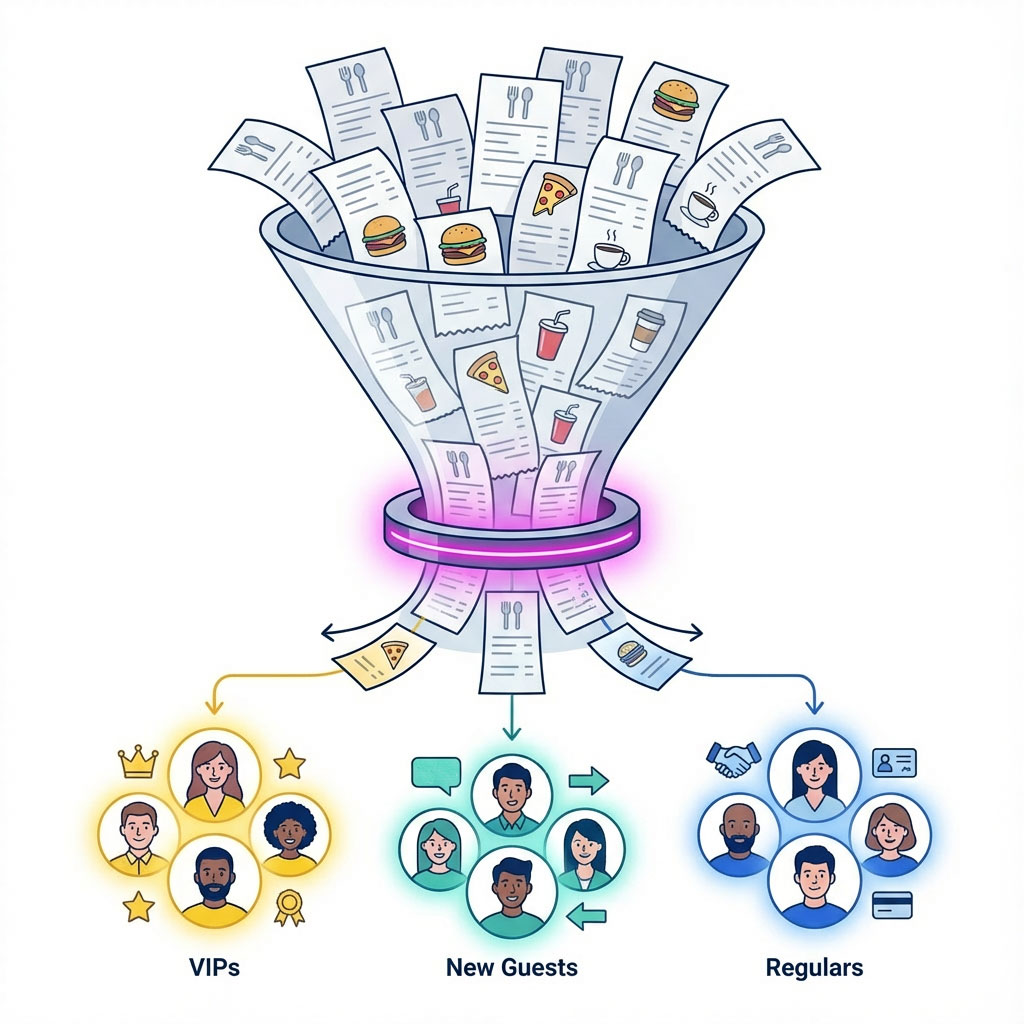
Raw data is useless until it's segmented. Here are the guest segments that matter most for restaurants:
High-Value Regulars (Top 20%)
These are your VIPs. They visit frequently and spend above average. In most venues, this group accounts for 60-80% of total revenue. Automation ensures they're recognised, rewarded, and never forgotten.
At-Risk Regulars
Guests who used to be regulars but haven't visited recently. Without automation, you'd never notice until they're long gone. With automation, you catch them at 30 days absent and bring them back before they forget you exist.
One-and-Done Visitors
First-timers who never returned. These represent missed opportunities. Automated welcome sequences can capture them early, before they default to a competitor.
Big Spenders, Rare Visitors
They drop $150 when they come in, but only twice a year. Worth keeping warm with occasional, well-timed communication.
Lunch Crowd vs. Dinner Crowd
Different behaviours, different messaging. Your $18 lunch special shouldn't go to the couple who only books Saturday dinner.
Here's the objection that comes up every time automation is mentioned: "Won't it feel impersonal? We're hospitality. We're supposed to know our guests."
It's a fair concern. Nobody wants to receive an obviously automated message that feels mass-produced.
But here's the counterintuitive truth: good automation feels more personal than manual marketing.
Why? Because manual marketing usually means sending the same message to everyone. You don't have time to write individual emails for 2,000 contacts. So everyone gets the same "Check out our new winter menu!" message, whether they're a vegan who only orders salads or a steak enthusiast who hasn't visited in months.
Automation lets you tailor the message to the guest. The vegan gets the new plant-based options. The steak lover gets the dry-aged special. The absent regular gets a gentle nudge. The birthday girl gets an offer a week before her day.
Automation handles the segmentation and timing. You write the content once. Everyone receives something relevant.
Let's look at the automations that actually work for restaurants.
Trigger: Guest makes their first booking, joins your WiFi, or signs up for your list.
Action: Send a warm welcome email introducing your venue, followed by a reason to return (free side dish, 10% off next visit, priority booking access).
Why it works: You capture them while the experience is fresh. First-time guests who receive a follow-up are significantly more likely to return than those who don't.
What to avoid: Don't hit them with three emails in a week. One welcome message, one offer, spaced appropriately.
Trigger: A guest who visited at least twice hasn't returned in 30-45 days (adjust based on your typical visit cycle).
Action: Send a "We miss you" message (email or SMS) with a compelling reason to return. Time-limited works well here.
Why it works: It's vastly cheaper to win back a lapsed guest than to acquire a new one. And they've already proven they like your venue.
Trigger: Guest completes a transaction or reservation.
Action: Send every eligible guest the same public-review invitation. You can also offer a private feedback channel, but it must be equally available regardless of the feedback a guest is likely to leave.
What to protect: Do not screen guests by sentiment before showing the public-review link. Google and Tripadvisor both prohibit selectively soliciting positive public reviews.
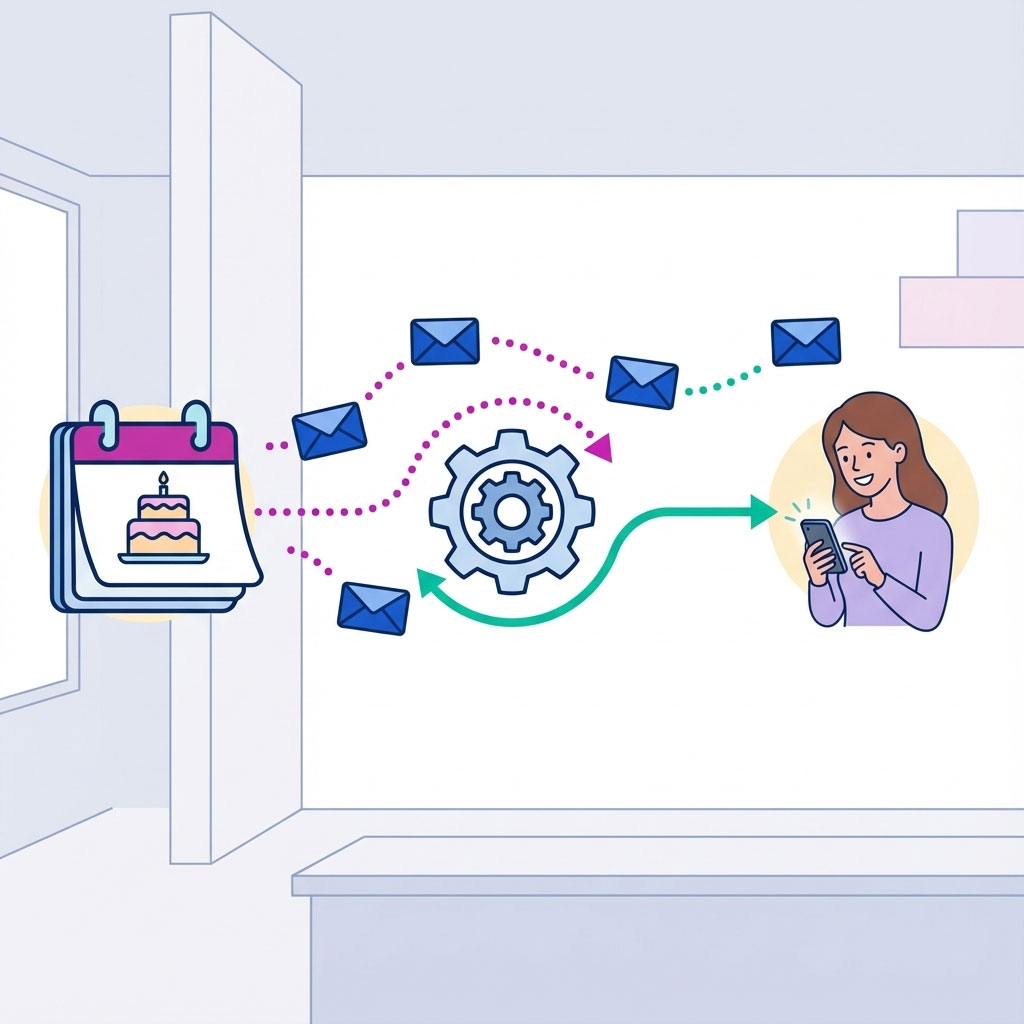
Trigger: Date field in your CRM.
Action: Send a celebratory offer 5-7 days before the date.
Why it works: Birthday dinners are high-value bookings. Tables are often larger. Spending is higher. And the guest feels genuinely appreciated.
Pro tip: Anniversaries work even better for full-service restaurants. "Happy anniversary, we'd love to host your celebration again this year" hits differently than a generic birthday discount.
Trigger: 24-48 hours after a visit.
Action: Send a simple thank you message. No hard sell. Just appreciation.
Why it works: It's unexpected. Most restaurants don't do this. It reinforces the relationship and keeps you top of mind for their next outing decision.
Not all platforms are created equal. Some are built for enterprise chains with dedicated IT teams. Others are generic email tools that don't understand hospitality.
Here's what actually matters when choosing a restaurant marketing automation platform.
If your marketing tool doesn't connect to your POS, you're missing 80% of the value. Transaction data (who bought what, when, how much) is the fuel that powers effective automation. Without it, you're back to guessing.
Look for native integrations with your specific POS. API connections work too, but seamless is better.
For full-service restaurants, your booking system holds crucial data: party size, special occasions, no-show history, preferences. Your automation platform should pull this in automatically.
Email works. SMS works better for time-sensitive offers (open rates are typically 90%+ versus 20-25% for email). You need both. Running them through separate platforms creates data silos and operational headaches.
Generic marketing platforms make you build everything from scratch. Restaurant-specific tools come with templates designed for hospitality: birthday campaigns, win-backs, review requests, loyalty triggers.
You shouldn't need to reinvent the wheel.
The platform should let you create segments based on hospitality-relevant criteria: visit frequency, average spend, days since last visit, items ordered, booking channel. If you can only segment by "opened last email," it's not built for restaurants.
Email and SMS marketing have rules: ACMA in Australia, GDPR in the UK, CAN-SPAM in the US. Your platform should handle opt-outs, consent, and compliance automatically. Getting this wrong means fines and reputation damage.
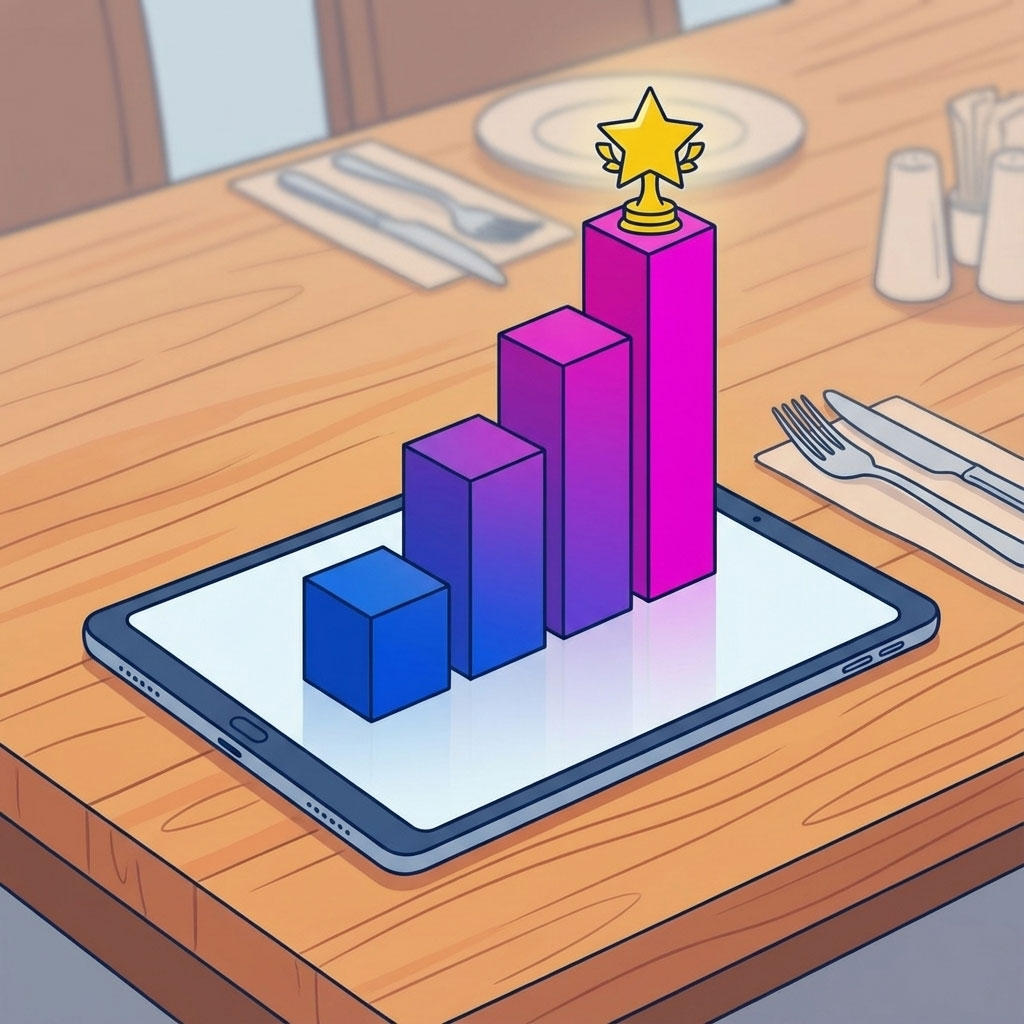
The beauty of automation is measurability. Unlike putting up a poster or running a radio ad, you can track exactly what's working.
But you need to track the right things.
Redemption Rate
How many guests who received an offer actually used it? This is the clearest indicator of campaign effectiveness.
Revenue Per Campaign
Total revenue attributed to a specific automation. Good platforms track this automatically by matching redemptions to transactions.
Customer Lifetime Value (CLV)
The total revenue a guest generates over their relationship with your venue. Automation should increase this over time by driving more frequent visits.
Repeat Visit Rate
Percentage of guests who return within a defined period. This is the number that matters most for long-term profitability.
Unsubscribe Rate
If people are opting out in droves, your messaging is off. A healthy unsubscribe rate is under 0.5% per campaign.
Open Rates
They're directionally useful but increasingly unreliable due to privacy features in email clients. Don't obsess over them.
Social Media Likes
Vanity metric. Zero correlation with revenue.
List Size
10,000 disengaged contacts are worth less than 500 active ones. Quality over quantity.
Let's flip the conversation. What does it cost to not implement automation?
Time Cost
If you're manually managing email campaigns, tracking birthdays in a spreadsheet, or trying to remember which regulars haven't been in lately, you're spending time that could be on the floor or in the kitchen. Conservatively, manual marketing efforts eat 5-10 hours per week. At owner rates, that's significant.
Missed Revenue
Every lapsed regular who drifts away unnoticed is lost revenue. Every birthday that passes without an offer is a missed high-value booking. Every first-timer who doesn't receive a welcome sequence is a retention opportunity gone.
Competitive Disadvantage
The venues that are automating will outcompete on guest retention. They'll fill more seats with existing guests while you're spending on ads to attract strangers. Over time, this gap compounds.
Modern restaurant CRM platforms typically cost $100-300/month. That's less than a single shift wage for most casuals. If one automation (say, a birthday campaign) generates two extra bookings per month at $100 average spend, you've covered the cost with margin to spare.
The question isn't whether you can afford it. It's whether you can afford not to capture this revenue.
Initial setup takes a few hours. Maybe a day if you're thorough. After that, it runs itself. The time investment upfront saves hours every week forever.
Most platforms also offer setup support or done-for-you options.
Only if you spam them. Well-segmented, well-timed messages feel helpful, not intrusive. A birthday offer a week before their birthday? Welcome. A generic blast every three days? Delete.
Automation done right reduces the bad messages (irrelevant blasts) and increases the good ones (personalised, timely, relevant).
Small venues actually benefit more. You don't have a marketing team. You don't have time to manually manage campaigns. Automation is how small operators compete with chains that have dedicated marketing resources.
If you're convinced and ready to move, here's how to actually implement restaurant marketing automation.
Week 1: Audit Your Current Data
What guest data do you have? Where does it live? Is your POS capturing email/phone? Can you export it? You can't automate what you can't access.
Week 2: Choose Your Platform
Based on your POS, reservation system, and budget, select an automation platform with native integrations. Prioritise ease of use over feature count.
Week 3: Set Up Core Automations
Start with three:
These three alone will generate meaningful ROI.
Week 4: Monitor and Adjust
Watch redemption rates. Check unsubscribes. Adjust timing and messaging based on what the data tells you.
Ongoing: Expand and Refine
Add welcome sequences, loyalty triggers, seasonal campaigns. Test different offers. Let the data guide you.
Entry-level platforms start around $50-80/month. Mid-range solutions with full POS integration typically run $150-300/month. Enterprise platforms for chains can exceed $500/month.
For most independent venues, a $100-200/month platform delivers the features needed to see meaningful results. The ROI usually covers the cost within the first few redeemed campaigns.
No. Modern restaurant automation platforms are built for operators, not IT professionals. If you can navigate a smartphone and manage a booking system, you can handle setup.
Most platforms offer onboarding support, and the best ones have hospitality-specific templates that work out of the box.
Only if you abuse it. Automation actually reduces annoyance by replacing irrelevant mass blasts with targeted, relevant communication.
The key is restraint: don't message more than necessary, always provide value, and make it easy to opt out.
Absolutely. In fact, smaller venues often see bigger relative gains. You don't have a marketing manager, so automation fills that gap. A cafe running birthday automations and win-back campaigns will outperform one relying solely on Instagram.
Initial campaigns can generate results within days. Birthday and win-back campaigns typically show clear redemption data within the first month. Longer-term metrics like CLV improvement take 3-6 months to become clear.
Restaurant marketing automation isn't about replacing the human touch. It's about protecting it.
When your marketing runs itself (targeting the right guests with the right messages at the right times), you get something valuable back: time. Time to be on the floor. Time to train your team. Time to refine your menu. Time to actually be in hospitality instead of hunched over a laptop writing newsletters.
The venues that thrive in 2026 and beyond won't be the ones with the biggest ad budgets. They'll be the ones who treat every guest interaction as data, turn that data into personalised engagement, and let smart systems do the heavy lifting.
Your regulars deserve to feel recognised. Your lapsed guests deserve a reason to return. Your birthday diners deserve to celebrate with you.
Automation makes all of that possible, without burning you out in the process.
nollie brings your bookings, guest data and campaigns together in one system, built for hospitality rather than adapted to it. No spreadsheets. No manual sends. Just smarter, measurable marketing that runs while you sleep.
Book a demo with our team to see the right nollie journey for your venue.
Bring lapsed restaurant guests back with three email templates, sensible timing and a simple way to track bookings. Practical advice for busy venue teams.
Set up Wix restaurant email marketing with labels, segments, automations, templates, guest data, and hospitality CRM upgrade signs.
A practical restaurant email marketing guide for 2026: campaigns, guest data, automation, compliance, and how to turn emails into repeat bookings.