Win Back Lapsed Restaurant Guests (Templates + Timing)
Bring lapsed restaurant guests back with three email templates, sensible timing and a simple way to track bookings. Practical advice for busy venue teams.

How restaurants fill Valentine's Day tables with email and SMS to existing guests, with copy-paste templates, a timing calendar and segmentation.
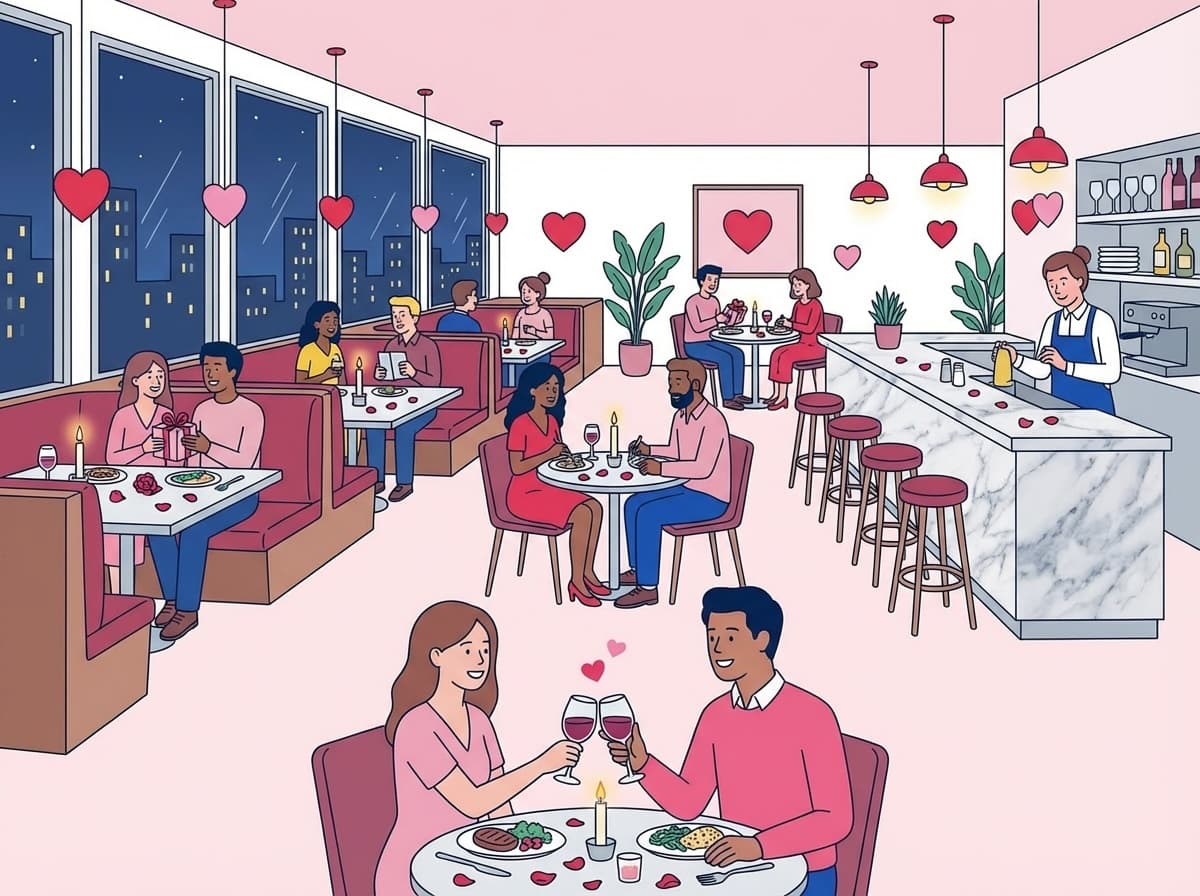
Valentine’s Day is the second-biggest revenue day for restaurants after Mother’s Day. You already know that. What you might not know is that most venues spend February chasing new customers when their biggest opportunity is sitting in their inbox, or more accurately, in their guest database.
Here’s the uncomfortable truth: around 70% of first-time diners never return (Bloom Intelligence, 2025). That means all those December covers didn’t automatically create February regulars. They created a database of people who liked you once but haven’t thought about you since.
Meanwhile, your top 12% of guests typically drive 40% of revenue (Bloom Intelligence, 2025). These are the people who already love you, who’ve already opted in to hear from you, and who are actively looking for somewhere to take their partner, their mates, or themselves on February 14th.
The question isn’t “how do we get new customers for Valentine’s Day?” It’s “why aren’t we talking to the ones we already have?”
A guest who’s eaten at your venue before doesn’t need convincing that your food is good. They don’t need to Google your reviews or check if the portion sizes match the photos. They’ve already cleared the biggest hurdle: they know what they’re getting.
For Valentine’s Day, when stakes feel higher and people don’t want to risk a bad experience, familiarity is a competitive advantage.
February approaches and your database is full of people asking themselves: “Where should we go for Valentine’s?” They’re going to book somewhere. The only question is whether they think of you first.
If you don’t message them, someone else will. Their inbox is about to fill up with Valentine’s promotions from every restaurant, wine bar, and meal-kit company in their postcode. Your silence is a choice to let competitors take the booking.
Acquiring a new customer costs 5-7x more than retaining an existing one. For Valentine’s Day specifically, warm leads from your database convert at significantly higher rates than cold advertising.
The maths is simple: guests are 72% more likely to return when they receive personalised offers (Restroworks, 2025). That’s not a marginal improvement: it’s a different business model.
Unlike paid advertising where you’re interrupting someone’s scroll, your database has given you permission to contact them. They want to hear from you (or at least they did when they signed up). That’s a fundamentally different starting position.
Timing matters more than most operators realise. Start too late and you’re competing on price with everyone else scrambling for bookings. Start at the right time and you’re positioning yourself as the obvious choice before guests even begin their search.
Goal: Reward your best customers with first access, create early momentum.
Channel: Email
Who to target: VIPs (5+ visits), high spenders, regulars
Message angle: “You’re getting this before anyone else”
Offer type: First pick of tables, complimentary welcome drink, or early-bird pricing
This isn’t your main campaign: it’s a soft launch to your best customers. The goal is to bank some bookings early and make your regulars feel valued.
Goal: Announce to your full database, build social proof.
Channel: Email
Who to target: Full database (excluding those who already booked)
Message angle: “Valentine’s tables now open”
Offer type: Set menu details, pricing, what makes this special
Include a line about tables filling up (if true) or limited availability. Even if you have plenty of capacity, you can limit specific time slots: “8pm sittings filling fast.”
Goal: Convert the undecided, reactivate lapsed guests.
Channel: Email + SMS
Who to target: Opened but didn’t book, lapsed guests (90+ days)
Message angle: “Tables filling quickly” / “We’d love to see you back”
Offer type: For lapsed guests, consider adding an incentive: complimentary prosecco, waived booking deposit, or a small discount
This is where SMS earns its keep. A well-timed text message with urgency cuts through email noise.
Goal: Final push, capture last-minute bookers.
Channel: SMS (primary), Email (secondary)
Who to target: Engaged but not booked, local postcodes
Message angle: “Last few tables” / “Don’t miss out”
Offer type: Straightforward availability message, no discounting needed at this point
Goal: Confirm bookings, reduce no-shows, upsell.
Channel: SMS
Who to target: Confirmed bookings only
Message angle: Confirmation + “Add champagne to your table?”
This isn’t about getting more bookings: it’s about protecting the ones you have and maximising spend per head.
Goal: Thank guests, capture feedback, plant seeds for next visit.
Channel: Email
Who to target: Valentine’s diners
Message angle: “Thank you for spending Valentine’s with us”
Offer type: Soft ask for review, mention upcoming events, or bounce-back offer for quieter weeks
Subject line options:
Body:
Valentine's Day is coming, and we wanted you to know first.
As one of our favourite guests, you get early access to our Valentine's evening before we open bookings to everyone else.
Saturday 14th February
Seatings from 5:30pm | Last booking 8:30pm
[Details about menu / experience: keep it brief]
Tables went quickly last year. If you'd like your usual spot (or a particularly good one), now's the time.
[Book Your Table]
See you soon,
[Restaurant name]
Subject line options:
Body:
Valentine’s Day bookings are now open.
Whether it’s a proper date night, an anniversary, or just an excuse to eat somewhere good together:
we’ve got you covered.
Saturday 14th February
[Set menu / à la carte] | [Price point if relevant]
Seatings from [time] to [time]
[One or two sentences about what makes the evening special: don’t oversell]
[Book Now]
Tables fill quickly, especially the 7:30-8pm slots. Book early if you want options.
[Restaurant name]
Subject line options:
Body:
Quick update: Valentine’s tables are booking faster than expected.
If you’ve been meaning to sort February 14th, now’s probably the time. The 7-8pm slots are nearly
gone, and we’d hate for you to miss out.
[Book Your Table]
Still a few options left, but not for long.
[Restaurant name]
Subject line options:
Body:
This is the last call for Valentine’s Day.
We have a handful of tables left for Saturday 14th February. If you want one, book now: we can’t
hold them.
[Book Now]
[Restaurant name]
Keep SMS under 160 characters where possible. Get to the point fast.
Valentine's tables going fast at [Restaurant]. Book your spot before we're full: [link]
Last few Valentine's tables at [Restaurant]. Saturday 14th Feb: don't miss out. Book now: [link]
See you tomorrow for Valentine's! Your table is booked for [time]. Any dietary needs? Reply to this message.
Thanks for spending Valentine's with us! We loved having you. Hope to see you again soon [Restaurant]
Sending the same message to your entire database is leaving money on the table. Different guests need different approaches.
Message angle: VIP treatment, exclusive access, no hard sell
Offer: First pick of tables, complimentary welcome drink, “your usual table”
Why it works: These guests don’t need convincing: they need to feel valued. The offer is recognition, not discount.
Message angle: “We miss you” / “It’s been a while”
Offer: Incentive to return (complimentary prosecco, 10% off, waived deposit)
Why it works: Industry data shows win-back campaigns recover 12-15% of lapsed guests (Restroworks, 2025). Valentine’s gives you a reason to reach out that doesn’t feel desperate.
Message angle: Premium experience, upgrade options
Offer: Champagne add-on, chef’s table, extended tasting menu
Why it works: These guests have already shown willingness to spend. Give them options to spend more, not less.
Message angle: Romantic, experience-focused
Offer: Set menu for two, couples’ wine pairing, window table
Why it works: If you have booking data showing tables of two on weekend evenings, you can reasonably infer couples. Message accordingly.
Message angle: Alternative celebration, anti-Valentine’s
Offer: Group booking discount, “bring your mates” positioning
Why it works: Not everyone has or wants a romantic Valentine’s. Capture the “anti-Valentine’s” crowd by acknowledging they exist.
Your email is competing with dozens of others. The subject line decides whether you get read or deleted.
"Valentine’s tables: you’re first in line"
Exclusivity, VIP feeling. Makes the reader feel special.
"[First Name], February 14th?"
Personal and direct. The question format prompts action.
"Before we tell everyone else…"
Creates intrigue and exclusivity. They’re getting insider access.
"Your Valentine’s plan, sorted"
Solves a problem. Positions you as the easy answer.
"Last few tables for Valentine’s"
Urgency and scarcity. Works best in final week.
"We’d love to see you back"
Warm and personal. Perfect for lapsed guest win-backs.
Here’s how one nollie customer is approaching Valentine’s Day this year.
The venue: A handmade pasta restaurant that’s been trading for 10 years. Their Valentine’s campaign keeps it simple:
Subject line: San Valentino 2026 (embracing their Italian identity)
Hero message: “Handmade, Heartmade”: ties their brand story (handmade pasta for 10 years) to the occasion
Body copy: Two short paragraphs about sharing something special, no hard sell
CTA: Single clear button: “Book Your Table”
Details section: Date, time, minimal fuss
What makes it work:
The email doesn’t try to do too much. It’s not offering six different packages or complicated early-bird tiers. It’s saying: “This is who we are, this is when we’re open, book if you want to.”
By the first week of February, most organised diners have already booked. You’re left competing for the last-minute crowd, often on price.
Start your campaign 4 weeks out. Bank early bookings, build momentum, and avoid the desperation discount.
Sending the same generic email to everyone wastes your best asset: the data you have about guest preferences and behaviour.
At minimum, separate: regulars (reward them), lapsed guests (win them back), and everyone else (inform them).
Valentine’s Day brings in guests who might not visit again for months. If you don’t follow up within a week, you’ve missed the window to convert a one-time Valentine’s diner into a regular.
Send a thank-you email. Ask for feedback. Mention an upcoming event. Plant the seed for their next visit.
Three set menu options, early-bird pricing that expires on different dates, add-ons with confusing pricing tiers: complexity kills conversions.
Pick one offer. Make it clear. Make it easy to book.
If you’re offering 20% off four weeks before Valentine’s Day, you’re training customers to wait for deals. You’re also signalling that you’re not confident in your product.
Use value-adds (complimentary drinks, priority seating) instead of discounts. Save the discounting for the final push if you genuinely need to fill tables.
Use this checklist to make sure you’re ready:
nollie brings bookings and marketing together for restaurants, cafes, bars and pubs, so every booking builds one guest profile nollie can act on. For Valentine’s Day, it turns “we should probably email our database” into “it’s already done.”
Specifically, nollie helps venues:
If you want to plan a Valentine’s campaign around the guests you already have: Book a nollie demo.
Start 4 weeks before Valentine’s Day (mid-January for February 14th). Your first email should go to VIPs and regulars offering early access. Most restaurants wait until February and end up competing on price instead of positioning. The 4-week timeline gives you space for an early-bird phase, general announcement, urgency push, and final call, without feeling desperate.
Use both email and SMS, but for different purposes. Email works best for storytelling, menu details, and longer lead times (2-4 weeks out). SMS wins for urgency and last-minute conversions (1 week out and day-of). Don’t send the same message on both channels: use email for depth and SMS for action.
At minimum, create three segments: regulars/VIPs (5+ visits: offer early access and recognition), lapsed guests (90+ days: offer an incentive to return), and everyone else (general announcement). If your data supports it, add segments for high spenders (premium upgrades), couples (romantic messaging), and groups (Galentine’s/Palentine’s angle).
Subject lines with personalisation, exclusivity, or urgency perform best. Examples: “Valentine’s tables: you’re first in line”, “[First Name], February 14th?”, “Before we tell everyone else…”. Avoid all caps, excessive punctuation, and generic phrases like “Don’t miss out!” or “Limited time offer.” Keep subject lines under 50 characters so they display fully on mobile.
Use value-adds instead of percentage discounts: complimentary welcome drinks, priority seating for regulars, or a small amuse-bouche. If you must offer a discount, save it for lapsed guest win-backs or the final week push, not your early-bird campaign. Discounting early trains customers to wait for deals and signals lack of confidence.
Bring lapsed restaurant guests back with three email templates, sensible timing and a simple way to track bookings. Practical advice for busy venue teams.
Set up Wix restaurant email marketing with labels, segments, automations, templates, guest data, and hospitality CRM upgrade signs.
A practical restaurant email marketing guide for 2026: campaigns, guest data, automation, compliance, and how to turn emails into repeat bookings.