
Take the booking. Run the service. Bring them back.
From £99 a month, no per-cover fees. One system for the whole night: your own booking page, a service view that keeps running through internet blips, and a report that finally tells you which booking came from which email. Here’s how each part works.
Book a 10-minute demoA booking page that belongs to your venue, not a marketplace.
Guests book at your own address (hosted by nollie, dressed entirely in your brand) or straight from a widget on your website. Five steps, smart defaults, done in under a minute.
- 10-minute table hold while they finish: no double-booking, no rush
- Deposits and extras : champagne on arrival, the set menu, the cake
- UK 14-allergen capture written straight to the guest profile
- Self-service changes , so guests modify or cancel without phoning during prep
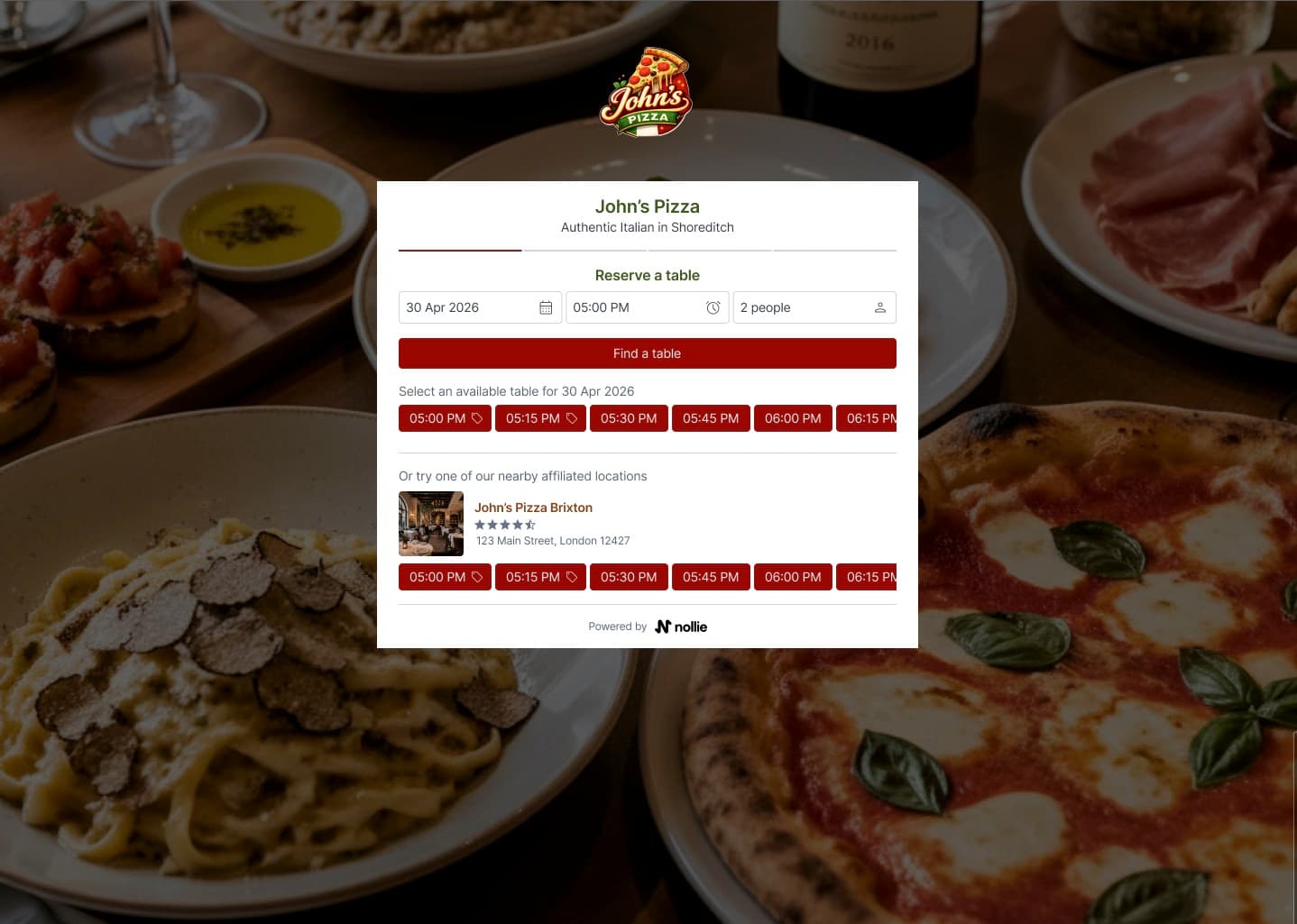
The hosted page: your brand, your address, done in under a minute.
Run the floor from a service view that doesn’t flinch.
Upcoming, arriving, seated, done: tonight’s room at a glance. A walk-in goes on the board in under fifteen seconds, and allergens and occasions travel with the card, so the kitchen knows before the guest sits down.
- Timeline grid : tables by 15-minute slots; drag a booking to re-time it
- Waitlist with auto-notify : a table frees, the next party hears straight away by email, or by text on the SMS add-on
- Offline-resilient , and carries on through internet blips: tonight’s bookings are cached and ready
- Engineered for peak , because a Saturday failure isn’t an inconvenience, it’s a catastrophe
Three small levers that change the night’s takings.
- Cut no-shows : take a deposit or card hold on the bookings that need one; serial no-shows are flagged before you confirm
- Lift the average spend by offering the set menu, the arrival drink or the cake at the moment of booking, while the table’s already saying yes
- Fill the quiet nights : attach a promotion to a slow Tuesday and send it only to the guests who’ll come for it
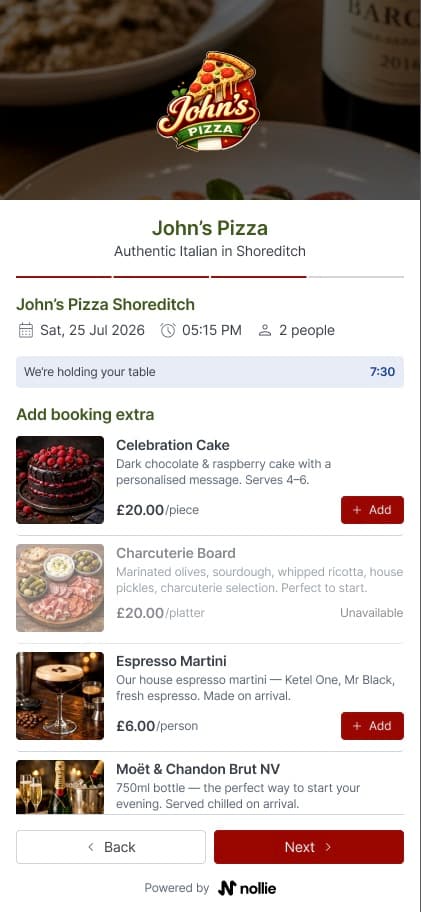
Extras taken at the booking: the cake, the board, the glass on arrival.
The report no booking-only tool can show you.
Because the booking, the guest and the campaign live in one system, every campaign reports in the only units that pay wages: bookings, covers and revenue, right down to revenue per email sent.
Not opens. Not clicks. Tables that sat down.
- Bookings & covers matched to the campaign that drove them
- Revenue per email : the line that settles “is this worth it?”
- Honest numbers : revenue is an estimate from average spend per cover, and the report says so
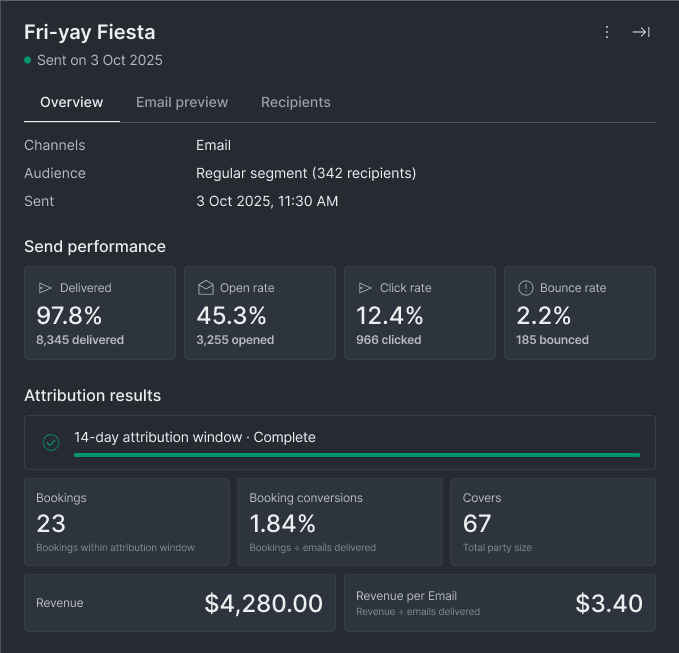
The same report a booking-only tool can’t produce: bookings, covers and revenue, not opens and clicks.
Every campaign a venue runs shows up in their booking system, traced to the email that sent them: real bookings, counted where they happen, not opens or clicks.
A guest book that writes itself.
Every booking enriches the profile automatically: visits, party sizes, no-shows, allergens, occasions. No tablet-side data entry, no spreadsheet ceremony. Then segments build themselves from how people actually dine:
- Regulars going quiet haven’t booked in 60 days
- Big-table bookers parties of six or more
- Occasion diners birthdays & anniversaries on file
- Serial no-shows ask these for a deposit
What’s ready now, and what’s next on the bench.
Live now
- Your own branded booking page: deposits, extras, the 14-allergen capture
- An offline-resilient service view (upcoming, arriving, seated, done) with the waitlist
- Guest profiles built from bookings, and segments that build themselves
- Email campaigns, with reports in bookings, covers and revenue
- SMS campaigns, on the SMS add-on
Coming soon
- Floor-plan view: the room laid out table by table
- Guided switch from OpenTable and SevenRooms
- Deeper promotion scheduling for the quiet nights
Comparing the practical details first? Read the full restaurant booking system guide for UK venues.
Switching is safe: you stay in control.
Run your old booking system and nollie in parallel during migration, so nothing drops on a busy Friday. Cut over on a quiet night once you’re confident, and roll back if you change your mind. Nothing about switching is an ultimatum.
See it on your own data.
Give us 10 minutes and we’ll show you how bookings, service and campaigns fit your venue.
Choose your market and tell us about the venue on the next page.