Wix Restaurant Email Marketing: Complete Setup Guide
Set up Wix restaurant email marketing with labels, segments, automations, templates, guest data, and hospitality CRM upgrade signs.

A practical restaurant email marketing guide for 2026: campaigns, guest data, automation, compliance, and how to turn emails into repeat bookings.
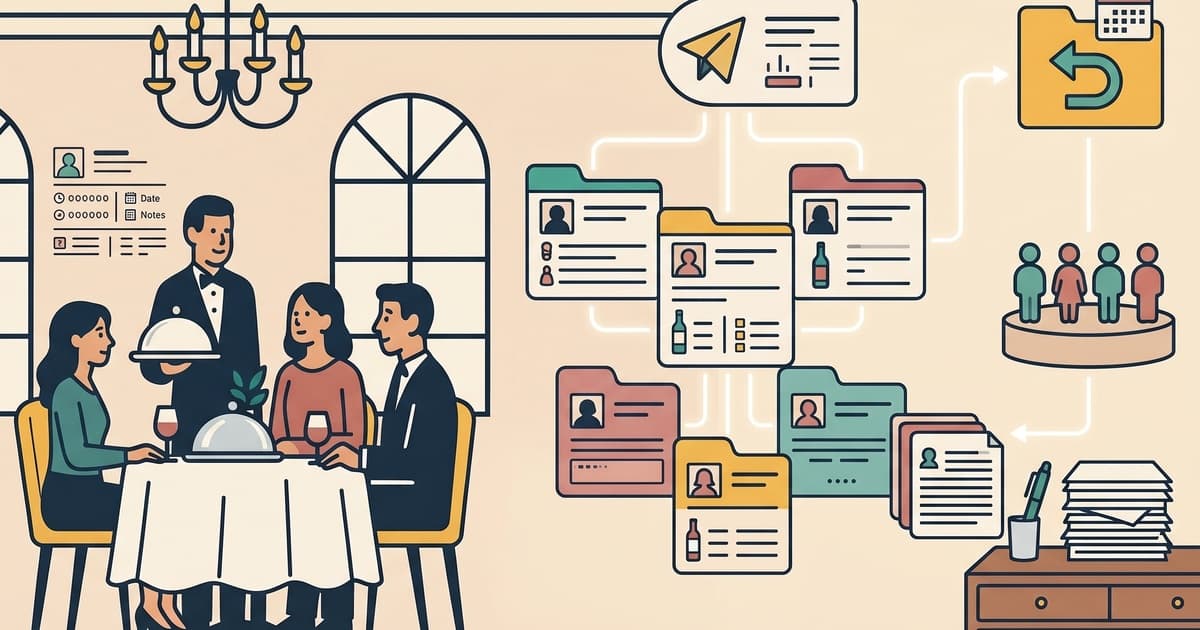
Most restaurants do not have an email marketing problem. They have a guest data problem.
The emails are the visible bit: a Tuesday lunch offer, a birthday message, a “we haven’t seen you in a while” campaign. But the part that actually makes those emails work is everything underneath: who the guest is, when they last visited, what they booked for, how often they come back, and what kind of message is worth sending.
That is why generic email tools often feel disappointing for restaurants. They can send campaigns, but they do not understand covers, bookings, lapsed guests, quiet nights, VIPs, or the difference between a one-time Mother’s Day guest and someone who comes in every second Friday.
Good restaurant email marketing in 2026 is not about blasting a list. It is about using the guest relationships you already have.
Social media is useful. Paid ads have their place. Delivery platforms can create demand, at a price.
But email has one advantage none of them can touch: you own the relationship.
An Instagram follower can disappear behind an algorithm change. A guest on a delivery app belongs to the marketplace. A Google Ads click costs you every time. An email subscriber is different. They have already interacted with your venue, booked a table, joined your list, visited your site, or given permission to hear from you.
That makes email one of the most efficient channels for restaurants, especially independent venues that do not have a full-time marketing team.
Used well, email helps you:
The mistake is treating every guest the same.
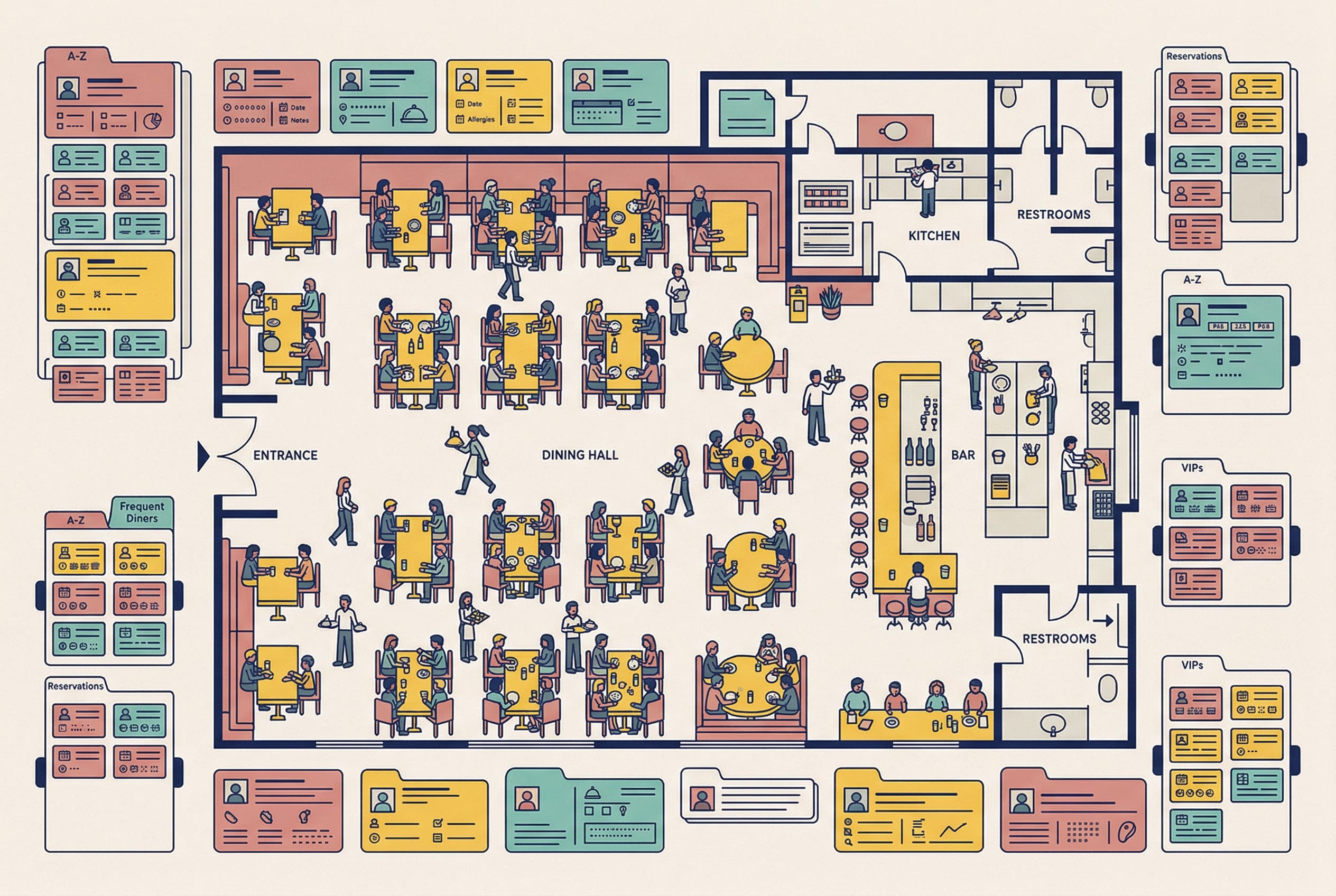
Most venues already have more useful data than they realise. It is just scattered across systems:
The work is not “collect more data” for the sake of it. The work is connecting enough of it to make useful decisions.
At minimum, you want to know:
Once you have that, your emails stop being generic.
“Book now for our new menu” is fine.
“Your birthday is coming up. Let us look after the first round” is better.
“We haven’t seen you since your last Sunday lunch booking” is better again, because it feels connected to the guest’s actual relationship with the venue.
You do not need a complicated email calendar to get value from email marketing. Start with the campaigns that map directly to restaurant revenue.
Send this when someone joins your list, books for the first time, downloads an offer, or signs up through your website.
Keep it simple:
For example: “Book your next table”, “See what’s on this month”, or “Tell us when your birthday is”.
This is not the place for a huge essay about your brand story. A little warmth, a little hospitality, one useful action. Done.
Birthday campaigns work because they are timely, personal, and naturally tied to dining out.
A good birthday email does not need to be clever. It needs to arrive at the right time with a reason to book.
Send it two to four weeks before the date, not on the day itself. People plan birthday meals in advance. If you wait until the actual birthday, you are mostly sending a nice thought to someone who has already made plans.
The offer can be modest:
The point is recognition. The booking is the outcome.
This is where restaurant email marketing earns its keep.
Every venue has services that need help: Tuesday dinner, Wednesday lunch, wet-weather weekends, shoulder periods between seasonal peaks. A quiet-night campaign gives you a way to drive demand without handing margin to third-party platforms.
The best quiet-night campaigns are specific.
Not: “Come in soon.”
Better: “Wednesday is looking quiet, so we’re opening up a midweek set menu for our regulars.”
That framing matters. You are not begging for bookings. You are creating a reason to come in.
Useful angles include:
A lapsed guest is not always gone. Sometimes they just need a reason to remember you.
Set up a campaign for guests who have not visited in 60, 90, or 120 days, depending on your normal visit cycle. A neighbourhood café might use a shorter window. A destination restaurant might use a longer one.
The message should feel human:
“We haven’t seen you in a while” works better than “You are now in our inactive customer segment”, which is technically true and spiritually criminal.
Good win-back emails usually include:
Do not over-discount. If every win-back campaign is a discount, you train guests to wait.
Your best guests should not receive the same emails as everyone else.
Regulars, high-spend guests, frequent bookers, private dining customers, and loyal locals are worth recognising. Not with a fake “exclusive” blast that goes to half the database, but with small moments that feel considered.
Examples:
This is where hospitality and marketing overlap. The email is not the relationship. It is the prompt that helps you continue it.
Most restaurants either send too rarely or panic-send when bookings are soft.
A sensible rhythm is:
That usually means your active subscribers hear from you one to four times per month, depending on their behaviour.
The key is relevance. A regular who books often can receive different messages from someone who came once last year. A private dining enquiry should not be treated the same as a casual brunch guest. A multi-venue group should not send every guest every venue update unless it actually makes sense.
Frequency becomes a problem when the emails are irrelevant. Useful emails are tolerated. Good ones are welcomed.
Restaurant email copy should sound like hospitality, not software.
Write like a good host:
Avoid vague marketing sludge: “We’re excited to announce”, “elevated dining experience”, “unforgettable culinary journey”. Unless your restaurant is located inside a LinkedIn post, leave it alone.
A stronger restaurant email usually has:
Open rates are useful, but they are not the scoreboard.
For restaurants, the better questions are:
If your email tool cannot connect campaigns back to bookings or guest behaviour, you will end up optimising for clicks instead of covers.
That is how restaurants get stuck making prettier newsletters instead of better revenue decisions.
Restaurant databases often come from multiple places: booking systems, Wi-Fi forms, competitions, old spreadsheets, POS exports, event enquiries. That makes consent messy if it is not handled properly.
Before sending marketing emails, make sure you understand the rules in your market.
In Australia, ACMA rules require proper consent for commercial electronic messages. In the UK and Europe, GDPR and PECR rules apply. In practical terms: know where the contact came from, what they agreed to, and whether they can unsubscribe easily.
This is not just legal housekeeping. It protects your brand. A guest who trusted you with their booking details should not feel like they were quietly fed into a marketing cannon.
Good systems keep consent attached to the guest record, not buried in a spreadsheet someone exported six months ago.
If you are starting from scratch, do this in order:
Do not try to build the perfect system before sending anything. Start with the campaigns closest to revenue, learn what works, and tighten the machine over time.
nollie is built for restaurants that want email marketing to feel less like admin and more like hospitality.
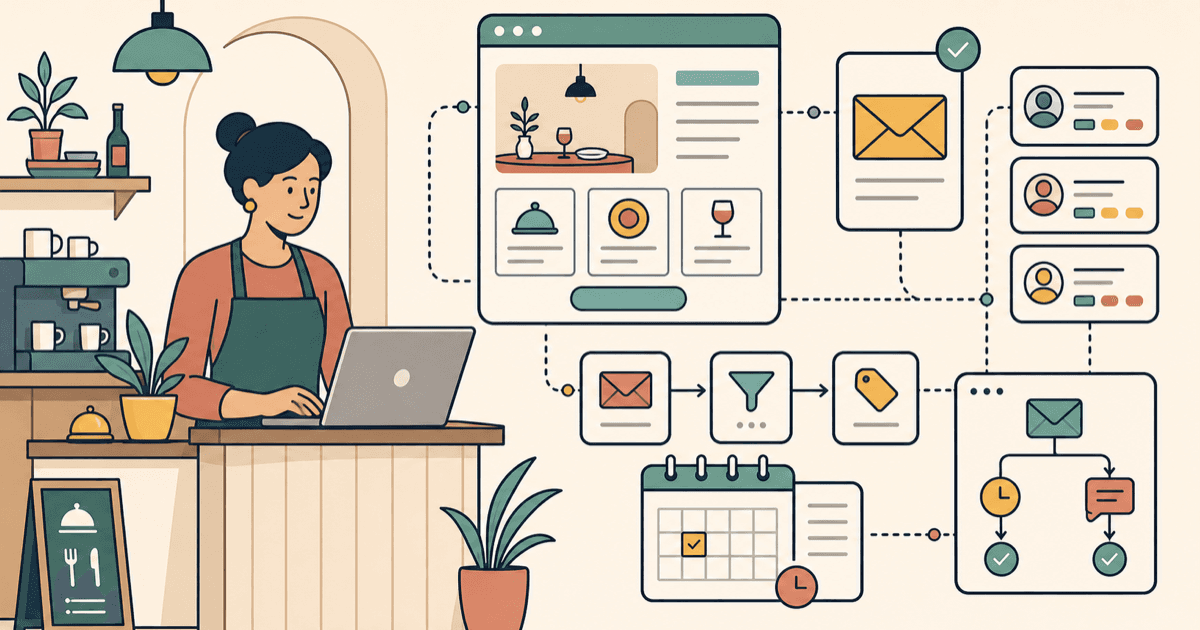
It connects guest data, booking behaviour, campaign templates, and automation so independent venues can send smarter messages without hiring a marketing team or wrestling with generic email software.
That means you can identify lapsed guests, recognise regulars, promote quiet nights, send birthday campaigns, and turn the data you already have into bookings.
Not more noise. More useful reasons for guests to come back.
Restaurant email marketing is not dead. Lazy email marketing is dead, or at least coughing theatrically in the corner.
The venues that win in 2026 will not be the ones sending the most emails. They will be the ones using their guest data properly: recognising the right people, at the right moment, with the right reason to book.
Start small. Connect the data. Automate the obvious. Make the message feel like hospitality.
That is where the revenue is.
Set up Wix restaurant email marketing with labels, segments, automations, templates, guest data, and hospitality CRM upgrade signs.
Honest comparison of nollie, SevenRooms, and Toast Marketing for restaurants. Features, pricing, and which is right for independent venues vs enterprise.
A practical restaurant CRM buyer's guide: features to look for, questions to ask, red flags to avoid, and how to choose the right platform for your venue.